







- EDITIONS:
 Spanish News Today
 Alicante Today
 Andalucia Today
Spanish News Today Editors Roundup Weekly Bulletin Feb 20

TOP STORIES: "Spain's housing crisis under the microscope, and what's being done to help it" & "New airport charges could mean more expensive flights to Spain"
In the week when the Andrew formerly known as Prince was arrested in the UK on suspicion of misconduct in public office – some might say long overdue – there is concern in Spain as the property sector drifts closer and closer to ‘getting out of control’ territory.
We’ve got plenty on that in this week’s edition, plus new airport charges and other news stories from around Alicante, Andalucía, Murcia and the rest of the country.
Spain’s housing market under the microscope
Spain’s housing crisis has been bubbling away for years, but lately it feels like it has gone into overdrive. New build prices have shot up, second hand homes are selling for eye watering sums and rents across the country are swallowing close to 40% of the average household budget.
In many areas, affordable housing projects have barely moved forward since the property bubble burst, leaving families, workers and even long-term expats scrambling for options. Now the government says it wants to change that.
This week, President of the Spanish Government Pedro Sánchez unveiled a huge new investment plan called España Crece, which translates as ‘Spain Grows’, designed to pour serious money into the housing market and boost supply.
The headline figure is €23 billion a year, made up of a mix of public and private investment, with the goal of delivering an extra 15,000 homes annually.

The message is that the country simply does not have enough homes, and until supply increases, prices will stay high. President Sánchez has said the new fund is about encouraging developers and investors to build homes for ordinary people rather than treating housing purely as a way to cash in. He has described access to housing as a constitutional right and made it clear the state wants to play a stronger role in shaping the market.
The scheme is expected to be up and running by the second quarter of this year. The government is putting €13.3 billion from EU Recovery Plan loans into the fund as seed capital. Unlike the Next Generation EU programme, which is coming to an end, this new vehicle is designed to run on a permanent basis with no fixed cutoff date.
In total, the wider España Crece fund is intended to mobilise up to €120 billion across nine key areas including housing, energy, digitalisation, artificial intelligence and infrastructure.
Housing Minister Isabel Rodríguez has said the plan offers Spain a real opportunity to catch up with other European countries when it comes to public housing stock, an area where it has long lagged behind. She argues that with the economy performing relatively strongly, this is the moment to turn growth into something concrete for the people who are currently being priced out of buying or renting a home.
For expats living and working in Spain, and for those thinking about making the move, the success or failure of this plan could make a real difference. With rents eating up such a large slice of income and property prices still climbing, any serious attempt to increase supply will be watched closely by everyone who calls Spain home.
Property boom in Murcia
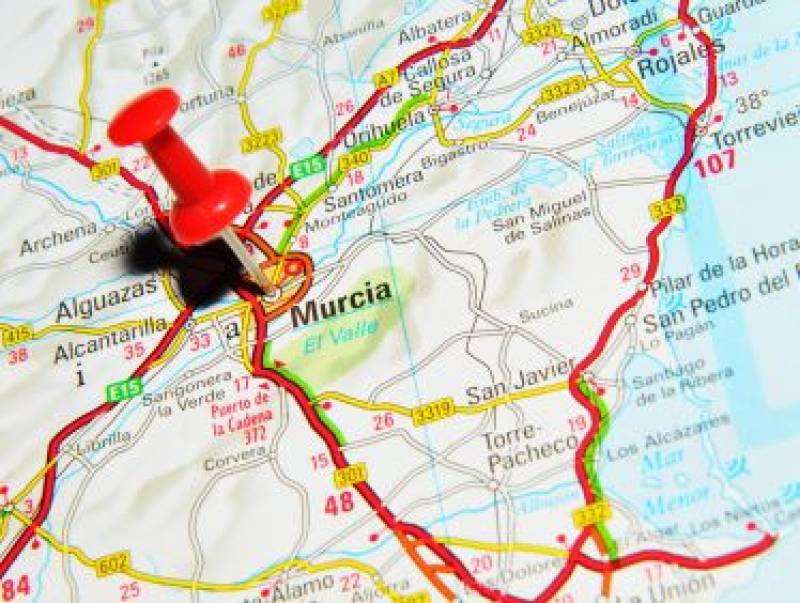
Drilling down into one autonomous community of Spain as an example of this – the Region of Murcia – we see demand skyrocketing seemingly without end, but challenges on the horizon as supply struggles to keep pace, raising prices apace.
The data show that the Region of Murcia is no longer Spain’s quiet coastal secret as it climbs the ranks as one of the country’s favourite destinations for overseas buyers. According to data from Spanish property portal Fotocasa, international demand remained strong in the final quarter of 2025, with Murcia holding its own among Spain’s coastal regions.
Nationwide, foreign buyers accounted for 13.58% of all property sales, with around 23,700 homes sold to overseas citizens in just three months. In the Region of Murcia, that figure was significantly higher. Foreign purchasers were responsible for 21.89% of transactions, placing Murcia among Spain’s leading destinations for international investment.
Only the Balearic Islands, the Valencian Community and the Canary Islands recorded higher proportions. Murcia was ahead of Catalonia and Andalucía, underlining just how far it has come in the eyes of global house hunters.
British buyers continue to top the list, making up 7.9% of all foreign purchases in late 2025. They are followed by Germans, Dutch, Romanians, Moroccans, French and Italians. And the market is clearly responding to this additional demand, as it seems prices are also on the rise.
The average cost of housing in the Region now stands at €1,696 per square metre, 25.8% higher than in January 2025. That leaves prices less than €100 per square metre below the September 2006 peak of €1,786, recorded at the height of Spain’s property bubble. Nearly twenty years on, the market has almost completed a full circle.
The steepest increases are concentrated in coastal and resort areas. Alhama has seen a striking 46.9% annual jump, with prices reaching €2,217 per square metre, the highest level ever recorded by Spain’s other major property portal, idealista.
Around the Mar Menor, the upward trend is just as eye-catching. Los Alcázares has climbed to €2,417 per square metre, up 34.9% and at a historic high. San Javier now stands at €2,304, up 32.2%, while San Pedro del Pinatar has risen 31.7% to €2,348.
Behind this uptick lies what José Ramón Blázquez, president of the Association of Real Estate Developers of the Region of Murcia, has described as unprecedented high demand combined with a shortage of new supply.
“The scarcity of new construction and the sustained increase in construction-related costs have driven prices upward, without any significant response from the authorities. Licences remain stalled, new developments are still blocked or partially blocked, and cities are not investing in the necessary infrastructure to unlock land and facilitate urban growth,” he noted recently.
Well, if there really is all this demand with the potential for Murcia to capitalise on, they’d better pull their socks up and do something to bring its building and planning up to scratch, quick sharp! Hopefully those ‘España Crece’ funds will help.
Un-fees-ible

With so many of us relying on cheap flights to and from Spain these days, the latest showdown between the budget airlines and state-owned airport operator Aena could really impact our upcoming travel plans.
Aena wants to raise its charges again, by a cumulative 21% between 2027 and 2031 under its new five-year regulatory plan known as DORA III. The idea is to fund a huge investment programme worth around €13 billion to modernise and expand airports across the network so they can cope with a forecast 1.69 billion passengers over the period.
Coming as absolutely no surprise whatsoever, the airlines are not impressed and as usual, Ryanair is one of the most outspoken.
Ryanair’s chief Eddie Wilson has branded the proposed increases “regrettable”, although he admitted they were not exactly a shock. He accused Aena of acting like a monopoly and charging some of the highest fees in Europe, particularly at regional airports where traffic growth is often slow.
What’s worrying for passengers is his warning that if DORA III goes ahead as planned it could mark “a turning point for Spanish tourism”.
That is not an idle threat. The last time Aena put up its fees, Ryanair cut around two million seats at regional airports across Spain.
The Airline Association and the International Air Transport Association are actually pushing for a 4.9% annual reduction in fees instead, arguing that cheaper charges would drive more traffic and ultimately deliver a bigger economic boost. The Airline Association says independent studies show Aena could still carry out its €10 billion plus investment plan without raising fees at all.
Ultimately, if airlines are forced to swallow higher airport costs, ticket prices are likely to rise. And at smaller regional airports, some routes may simply disappear if they no longer stack up financially.
To rub salt in the wound, while Aena is preparing to splash billions across much of its network, Murcia’s Corvera Airport will not see a single cent from the DORA III pot.
Corvera, which opened in January 2019, is owned by the regional government and managed operationally by Aena under a concession, which places it outside the standard regulatory framework that governs the rest of the airports.
In practical terms, that means Corvera does not compete for, or benefit from, the big investment fund being earmarked for other Spanish airports. Any future upgrades or expansion there will depend on passenger growth and profitability.
That leaves Corvera in a slightly awkward spot. Passenger numbers were up 26.7% this January compared to the same month last year, which is encouraging, but the airport has struggled at times to build consistent traffic since opening. If airlines such as Ryanair decide to cut routes in response to higher charges elsewhere, the knock-on effect could easily be felt in Murcia too, though for now the airline has actually vowed to increase frequencies on its Murcia flights, for this summer at least.
DORA III still needs final approval from the Council of Ministers, with a deadline in September. Until then, airlines, airport bosses and regional governments will all be watching closely. For travellers and expats who rely on affordable, regular flights in and out of Spain, the outcome could shape ticket prices and route maps for years to come.
Murcia
Onto our dedicated Murcia section, now, where there are several big news stories that caught people’s attention, as usual. We’ll start in Los Narejos, where a place many locals had almost given up on is finally being brought back to life.
 This is the old Las Velas shopping complex, which has stood partly empty for years, and is now being redeveloped, ready to reopen before summer as the Mar Menor Centre. The project is led by businessman Enrique Roca, known for his link to Real Murcia CF. Manager Miguel Ángel Canales said the building needed major work when the team first entered, especially safety systems and repairs.
Some of the plans include reopening the cinemas, improving access points and creating outdoor seating areas if Los Alcázares Town Hall approves pedestrian changes nearby. The idea is to bring it back to how it was in its heyday.
There has also been positive news for families across the Región de Murcia as Education Minister Víctor Marín confirmed that from the 2026-27 school year, class sizes for children starting Primary school will drop from 25 pupils to 22.
Teachers say even a small reduction can make classrooms calmer and give them more time to help each child, and it can be especially helpful for pupils who need extra support or who are still getting used to school routines. This is especially good news for parents who may be worried about their children making the jump from infant school to Primary next September.
The Mar Menor was back in the news this week after three more business leaders were convicted over illegal wastewater dumping linked to pollution in the coastal lagoon. The cases form part of a bigger investigation into discharges from farmland in the Campo de Cartagena.
Prosecutors said the wastewater contained nitrates released without permission from the Confederación Hidrográfica del Segura. Courts in Cartagena heard that one case involved more than 11,000 cubic metres of discharge near Torre Pacheco.
Scientists have warned for years that nitrates act like fertiliser in the lagoon, encouraging algae growth that blocks sunlight and reduces oxygen levels for marine life. Environmental groups say the growing list of convictions shows authorities are finally holding polluters accountable, but they also stress that restoring the Mar Menor will take years, and preventing further damage is just as important as punishing past offences.
Talking of the future of water in the region, it has also been announced that up to 750 tonnes of oxygen will be supplied between 2026 and 2028 to support ‘ozonation’ at the Campotéjar aqua plant in Molina de Segura, a €200,000 investment to help treat water from the Tajo-Segura transfer pipe, which supplies Murcia city and nearby areas with water from up in the centre-north of Spain.
Ozone, which will be produced on site from high-purity oxygen, is used to break down organic matter and remove pesticides more effectively than chlorine, and similar systems are planned for Lorca and the Sierra de la Espada plant. One might balk at the idea of spending €200,000 on air, but if it keeps our drinking water safe, then I’m all for it.
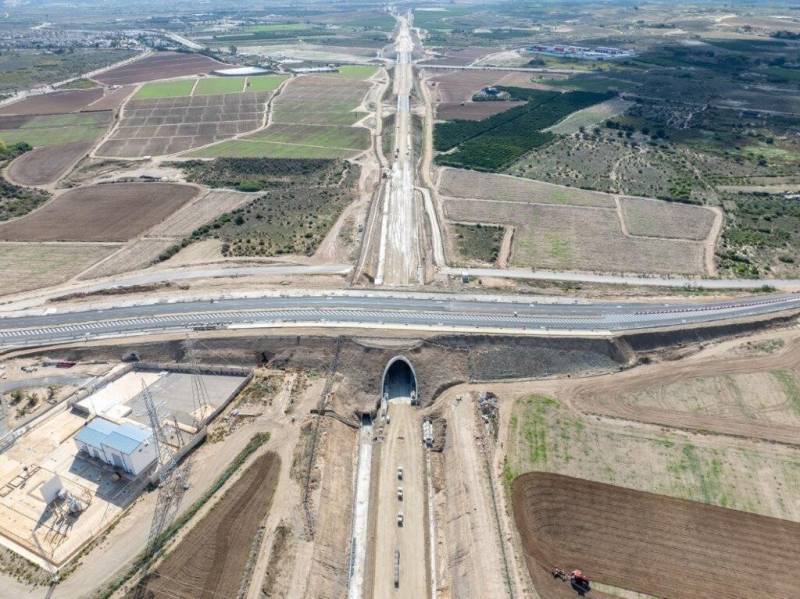 On the other side of coastal Murcia, there was a positive development as the Spanish Council of Ministers approved a €108 million contract for the high-speed rail line between Lorca and Vera. Government delegate Francisco Lucas announced the decision at the Real Casino de Murcia, describing it as an important step in improving links with Andalucía, and of course for getting the Mediterranean Corridor completed to connect southern Spain all the way up to the French border with high-speed tracks.
The 61.5-kilometre section from Lorca to Vera will include stations in Puerto Lumbreras, Almendricos, Pulpí and Vera-Almanzora, with the construction work being managed by Adif AV as part of the connection that will eventually reach to Almería capital, but that won’t be for several years yet, probably.
Meanwhile, drivers are counting down to March for the opening of the final section of Murcia’s Northwest Bypass, the Arco Noroeste. The bypass is due to open in the second half of March, completing the full 21.7-kilometre route linking the A30 and A7 roads.
This last stretch connects near Archena and Alcantarilla and should reduce traffic both in Murcia city and on the surrounding roads. Several towns are expected to benefit directly, including Molina de Segura, Lorquí, Villanueva del Río Segura, Ceutí, Alguazas and Las Torres de Cotillas. Not only will it ease traffic for commuters and long-distance drivers, but the major benefit, of course, is that the long-running construction works will finally come to an end!
As for what’s happening around the Region over the coming days, there are more Carnival celebrations and events taking place in Los Alcázares, Cehegín, Totana, Santiago de la Ribera, Alhama de Murcia and, of course, Águilas. Don’t miss out!
For more events coming up, do check out the EVENTS DIARY:
Spain
The weather has definitely been a bit of a rollercoaster this winter. We’ve had torrential rain followed by gale-force winds followed by spring-like sunny days lately. However, what we’ll all probably remember most from early 2026 is the sheer number of storms that have hit Spain.
Since the start of January, 10 named high impact storms have rolled across the country in just six weeks, something seasoned meteorologists say they have never seen before.
Francis, Goretti, Harry, Ingrid, Joseph, Kristin, Leonardo, Marta, Nils and Oriana have all taken their turn battering parts of the mainland, pushing the official naming list almost to the letter O by mid February.

The seasonal list of 21 names was published back on September 1 by the State Meteorological Agency in coordination with Portugal, France, Andorra, Belgium and Luxembourg. These names are reserved for storms expected to cause serious disruption, not your average spell of wind and rain, which makes the speed at which they have been used all the more striking.
Francisco Martín from Meteored, who has more than 30 years’ experience, has described the run as “extraordinary”, saying no meteorologist can recall 10 high impact storms in a row.
Aemet spokesperson Rubén del Campo pointed out that the country has effectively been dealing with one named storm every four or five days, adding that it is not a typical pattern and not something reflected in recent records.
Here’s hoping the bad weather doesn’t cause an increase in illness, because doctors across Spain have begun a wave of strikes that could rumble on for the next five months. Six medical unions have launched weekly walkouts in protest at government reforms they believe fail to properly protect their profession, with seven strike days planned each month from mid-February through to mid-June.
At the heart of the dispute is a reform of the framework statute that governs working conditions in the National Health System. Although the Ministry of Health reached an agreement in late January with other unions representing healthcare staff, doctors’ groups have rejected the deal.
They want their own separate statute, a distinct professional classification under a new A1 category, a 35-hour working week with anything extra treated as voluntary paid overtime, plus options for early retirement and safeguards against forced relocations.
Union leaders have apologised to patients for disruption but insist that improving doctors’ conditions is essential for protecting the quality of care in the long term.

There has at least been some long-awaited good news for Spain’s lowest paid workers. On Monday February 16, President Sánchez signed off on a 3.1% increase in the minimum interprofessional wage (SMI) for 2026, following drawn out negotiations between the Ministry of Labour and trade unions.
Once the royal decree is approved by the Council of Ministers, the SMI will rise to €1,221 gross per month paid in 14 instalments, an increase of €37 per month.
For workers on minimum wage, the rise amounts to an extra €518 per year and will be applied retroactively from January 1, 2026, meaning back pay for the first two months of the year should follow once the decree is in force.
Because the SMI is set annually by royal decree after consultation with social partners, the government does not need Congress to ratify the increase, which allows it to move relatively quickly even if critics feel sidelined.
With the 2025-26 Declaración de la Renta, or Income Tax, campaign starting on April 8, a day earlier than last year, there has also been reassurance that the pay rise will not quietly disappear into the tax system.
The government is keeping a special deduction mechanism similar to the one used previously, so any income tax withheld from minimum wage earners during the year will be returned when they file their annual return.
There are also updated allowances that may catch the eye of older residents and families living together. Taxpayers who support a dependent ascendant in their main home can claim €1,150 for each relative over 65 who meets the conditions, rising to €2,250 if that person is 75 or older, with the total benefit in some cases reaching €2,550.
The family member must live at the same address for at least half of the tax year and have annual income below €8,000, excluding exempt income. The deduction can also apply where the ascendant is under 65 but has a recognised disability of 33% or more.
Alicante
In Alicante this week, drivers in Pilar de la Horadada are less than happy over further increases in tolls on the AP-7 autopista. While the stretch of the AP-7 between Monforte del Cid and El Campello, which acts as Alicante’s ring road, had its toll permanently scrapped by Spain’s Council of Ministers in December 2025, Pilar residents are still paying, and paying more.
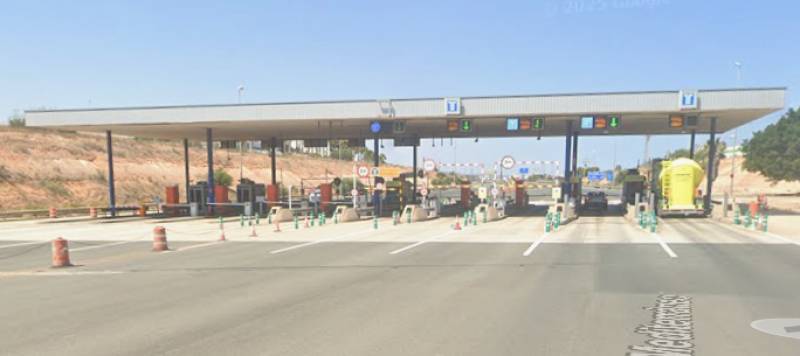
High-season tolls for light vehicles have crept up from just under €5 to €5.10. In low season, it is €2.85. High season, by the way, is not just summer. It runs from June to September and for 17 days from the Friday before Easter to the following Sunday. So plenty of opportunities to dip into your pocket.
Mayor of Pilar de la Horadada, José María Pérez, did not mince his words. “Going to Alicante now costs €20.40, that’s a lot of money for just 17 kilometres.” He has branded the toll an injustice, especially given that the concession runs until 2048. The town council is now working with Torrevieja and San Miguel de Salinas to push for its removal and has contacted the Ministry of Roads directly.
There is also a more serious edge to the argument. To avoid the toll, many drivers opt for the N-332, adding pressure to an already busy road and potentially complicating emergency journeys towards Torrevieja Hospital. So what looks like a few euros at a toll booth quickly turns into a broader debate about fairness, infrastructure and safety.
Talking of Torrevieja Hospital, just down the coast they are tackling a very different kind of problem, one that comes buzzing in on warm evenings.
This February’s sudden turn towards milder weather has brought mosquitoes out far earlier than usual, and Torrevieja City Council has decided to fight back with nature rather than chemicals. Twenty nest boxes for common swifts have been installed at the University Hospital, facing the lagoon. The idea is simple: to encourage more insect-eating birds to settle at the hospital and let them feast on thousands of mosquitoes a day.
Councillor Diana Box Alonso has framed it as a sustainable, practical solution, especially important in a healthcare setting. The common swift, a protected migratory species, travels close to 10,000 kilometres each year before returning to Spain between March and September, precisely when mosquito numbers explode. If the swifts move in as hoped, they could become the hospital’s quiet, winged pest control team.
From birds in the sky to something far larger in the water, Valencia up the coast has been dealing with the body of a nine-metre fin whale, weighing around 6.5 tonnes, which was found dead on the breakwater at the entrance to the Royal Yacht Club of Valencia recently.
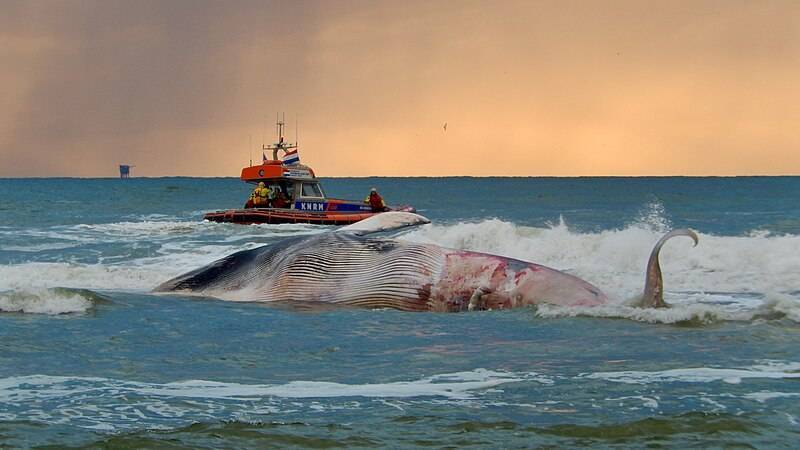
The animal, one of the largest species on Earth, second only to the blue whale, was spotted by a vessel from the Blue Marine Foundation, which alerted the regional Stranding Network. Specialist teams from the Oceanogràfic Foundation and the University of Valencia are now carrying out a full necropsy to determine the cause of death.
Fin whales are not strangers to Mediterranean waters, but finding one inside a port is rare and unsettling. The incident follows the discovery of four stranded Cuvier’s beaked whales along the coasts of Murcia and Almería in a single day last month, raising questions about whether something wider is affecting large marine mammals in Spanish waters.
And finally, in Elche, aeronautics company PLD Space is preparing what is being hailed as the first fully Spanish private space mission. Its MIURA 5 rocket is scheduled to launch two next-generation 5G satellites into orbit in 2027 under an agreement with Sateliot.
These Tritó satellites, each weighing around 160 kilos, are designed to provide direct-to-device connectivity, meaning they can link straight to mobile phones and IoT systems without relying solely on ground networks.
Spain already made headlines in 2023 when MIURA 1 successfully reached space. Now MIURA 5 is in its final validation phase ahead of a planned launch from French Guiana. Alicantastic!
Andalucía
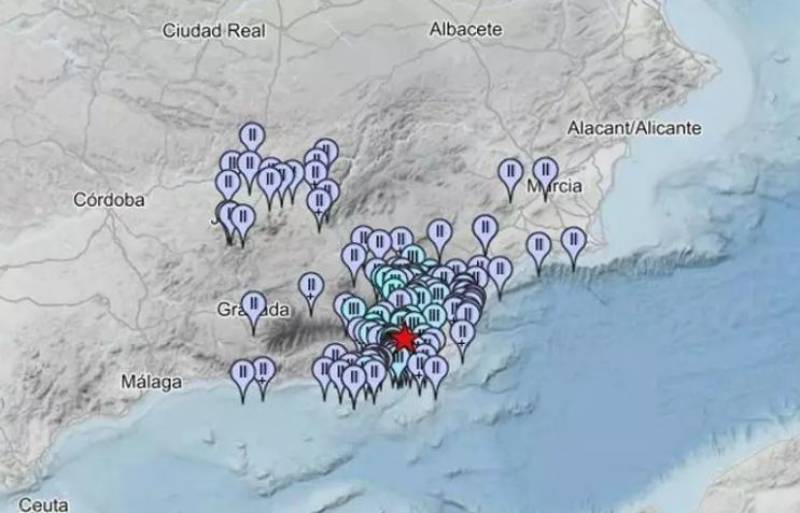 Andalucía’s week got off to a shaky start when a magnitude-4.3 earthquake rumbled under Almería province just before 1am on Monday February 16, striking six kilometres from Tabernas with a very shallow three-kilometre depth that sent tremors across the whole of southeast Spain.
The National Geographic Institute flagged it as the strongest locally in recent times, topping a 4.2-magnitude quake from last October.
Up to 14 aftershocks followed in the Los Filabres area, the biggest a 2.6-magnitude tremor at 5.38am. No injuries or damage came to light, which is always the best outcome from these unexpected visitors. The shaking was most noticeable near the epicentre, obviously, but was also felt in several Almería towns and as far away as parts of Granada, Jaén and Murcia.
While tremors rippled underground, shockwaves of another kind continued above as rail problems hit the Costa del Sol hard, piling financial pressure on top of the earthquake’s jitters. Turismo Costa del Sol and Málaga Provincial Council project a whopping €109 million blow from the Madrid-Málaga high-speed line closure, triggered by January’s Adamuz accident. That line is expected to be fully reopened by March 1, but until then around 65,000 of the 140,000 tourists who would usually use the service are set to skip the area, even despite the possibility to switch to planes or buses instead.
Direct spending alone drops by €71.8 million, with the effects being felt through hotels, eateries and shops. Málaga Provincial Council president Francisco Salado put it plainly: “We’re not just talking about hotels, restaurants or leisure businesses, but the entire provincial economy.”
He highlighted knocks to business trips, congresses and meetings that rely on quick Madrid links, calling for central government aid and a fix-it plan. AVE trains are a lifeline for winter domestic getaways, making the gap especially painful now.
Thankfully, there was a hint of recovery this week, exactly one month after the Adamuz crash, as high-speed trains resumed most of the other disrupted Andalucía routes. Renfe got the ball rolling with Madrid-Seville, Cádiz, Granada and Alvia to Almería services. Private operators Iryo and Ouigo quickly followed once Adif completed repairs and safety checks.
Not everything’s back to normal yet. As well as the bus replacement service continuing on the Madrid-Málaga from Antequera to Málaga capital, on the Madrid-Huelva line, the Córdoba-Huelva stretch runs by bus.
Also getting slowly back to normal is the Cádiz town of Grazalema, which welcomed back families this Monday after 11 days of evacuation due to unstable ground from relentless rain. From 4pm, access reopened to 1,342 of 1,619 homes, letting around 1,728 residents, about 80% of the town, finally return, after their extended stay down in the Málaga town of Ronda.
Resident Manuela described her “overjoyed” relief to step through her door, finding things “okay, all things considered,” while her neighbour Antonia remembered abandoning food mid-meal in the rush, describing her return as “a very strange feeling” mixed with “immense joy”.
Still, about 200 homes remain in a red zone awaiting further checks by the Spanish Geological and Mining Institute.
Meanwhile, President of the regional government, Juanma Moreno, encouraged those back to support neighbours still waiting even as he unveiled a €1.78 billion recovery package to help repair damage caused by the storm across Andalucía.
It’s a long road to recovery, but as Grazalema’s resident philosopher Antonia put it, “the people save the people”.

You may have missed…
- LaLiga is offering €50 to anyone who dobbs in a bar showing pirated football in Spain.
LaLiga is now paying people €50 to report bars, restaurants and casinos that are showing football without a proper broadcast licence, and it’s fair to say the scheme has raised a few eyebrows… - Discover Murcia's latest historical attraction: An underground car park with views of the medieval city wall!
Visitors parking in the Glorieta de España car park in Murcia city might soon find themselves face‑to‑face with a stunning piece of history as the city’s famous Muralla del Sol is visible behind a multi-storey pane of glass. - Prosecutors will seek 25-year prison sentence for Brit accused of horrendous Camposol murder of Vanesa in 2022.
The Public Prosecutor’s Office in Murcia is seeking a 25-year prison sentence for Michael Carter, the Englishman accused of beating his wife, Vanesa, to death in Camposol in December 2022. The police investigation has now been completed and the trial is expected to start in 2026, though a firm start date has not yet been set. - Spain’s 2025 Income Tax simulator is now live: Check if you owe money or get a refund.
The Spanish Tax Agency tool lets you preview your IRPF income tax result without needing a Cl@ve or digital certificate – check it out now! - Earthquake count around Teide (Tenerife) surges to 1,400 in 14-hour burst.
After weeks of heightened attention around Mount Teide, in Tenerife, the latest review of seismic data has revealed that the recent swarm was far more intense than first thought: more than 1,400 small earthquakes were recorded between Monday and Tuesday, almost double the 755 initially identified.
That’s it for this week. Thanks for reading and we’ll be back with more for you next week.
See you then!